We woke in the parking lot of the Indiana Dunes Visitor Center, our little skoolie tucked among a loose circle of fellow wanderers—vans, RVs, a camper with a satellite dish. There’s a quiet camaraderie among these temporary neighbors, all of us stopping just long enough to exhale before the next stretch of road.
We stepped inside the visitor center to stretch, to learn, and to get our sticker for the logbook. We watched the park film—one of those ten-minute government productions of rangers talking about the wonders of the flora and fauna and of the fight to preserve the land. It told the story of the land—how it shifts, breathes, lives. How these dunes are not static but restless, inching and rearranging themselves with the wind. It showed the plants that claw their way into the sand and dare to stay, and the animals– foxes, frogs, herons, owls– that live in this shifting world like tenants in a house that slowly moves room to room.
Indiana Dunes, I learned, is one of the most ecologically diverse national parks in the country. That still surprises me. You think “Midwest” and your brain might conjure flat fields, grain silos, billboards fading in the sun. But this park, just 15 miles long, hemmed in by steel mills and cities and one very persistent lake, is a kind of miracle. Within its small stretch are more than 1,100 native plant species. That’s more than you’ll find in Hawaii. More than in Yellowstone. The reason, it seems, lies in the clash of environments: prairie meets forest meets marsh meets dune, all within shouting distance. It’s a place of transition. A crossroads. And nature, when given the opportunity, loves a good intersection.
But the most astonishing thing about the park isn’t the dunes or the frogs or even the lake. It’s that it exists at all.
It very nearly didn’t.
There’s a name that is mentioned over and over again here: Diana of the Dunes. Her real name was Alice Gray. In 1915, she left the city behind, Chicago’s universities and her academic prospects, and moved into a shack near the lakeshore. A woman alone, barefoot in the dunes, she became a kind of local legend. Some saw her as mad. Others, a mystic. But what she truly was, was early. Early to see the value of wildness in a place the world was trying to tame. Early to understand that this stretch of coast, with its forests and swamps and moving hills of sand, deserved more than power plants, mills, strip mines and subdivisions. She wrote essays– quiet, persuasive ones– and others began to listen. Her spark ignited a movement. Eventually, people rallied to protect this place, though it would take most of a century and a great deal of bureaucratic wrestling until eventually becoming a National Seashore. The park as we know it wasn’t named a National Park until 2019. That’s how recent the miracle is.
By mid-morning, we were off to Lowe’s. Not for lumber or garden tools, but to raise our grey water tanks: a practical concern, and one that had become increasingly urgent every time we scraped bottom pulling into a gas station. I browsed the local version of Walmart while Charlie lay under the skoolie, wrench in hand, solving the kind of problem that doesn’t exist when you live in a house but defines your day when your house has wheels.
I made lunch in the parking lot and organized things while he worked. There’s something deeply grounding about mundane tasks on the road. Folding clothes with a view of a loading dock. Washing dishes in the shade of your own vehicle. It reminds you that travel isn’t always adventure… it’s also plumbing. Maintenance. Getting your hands dirty so you can keep moving.
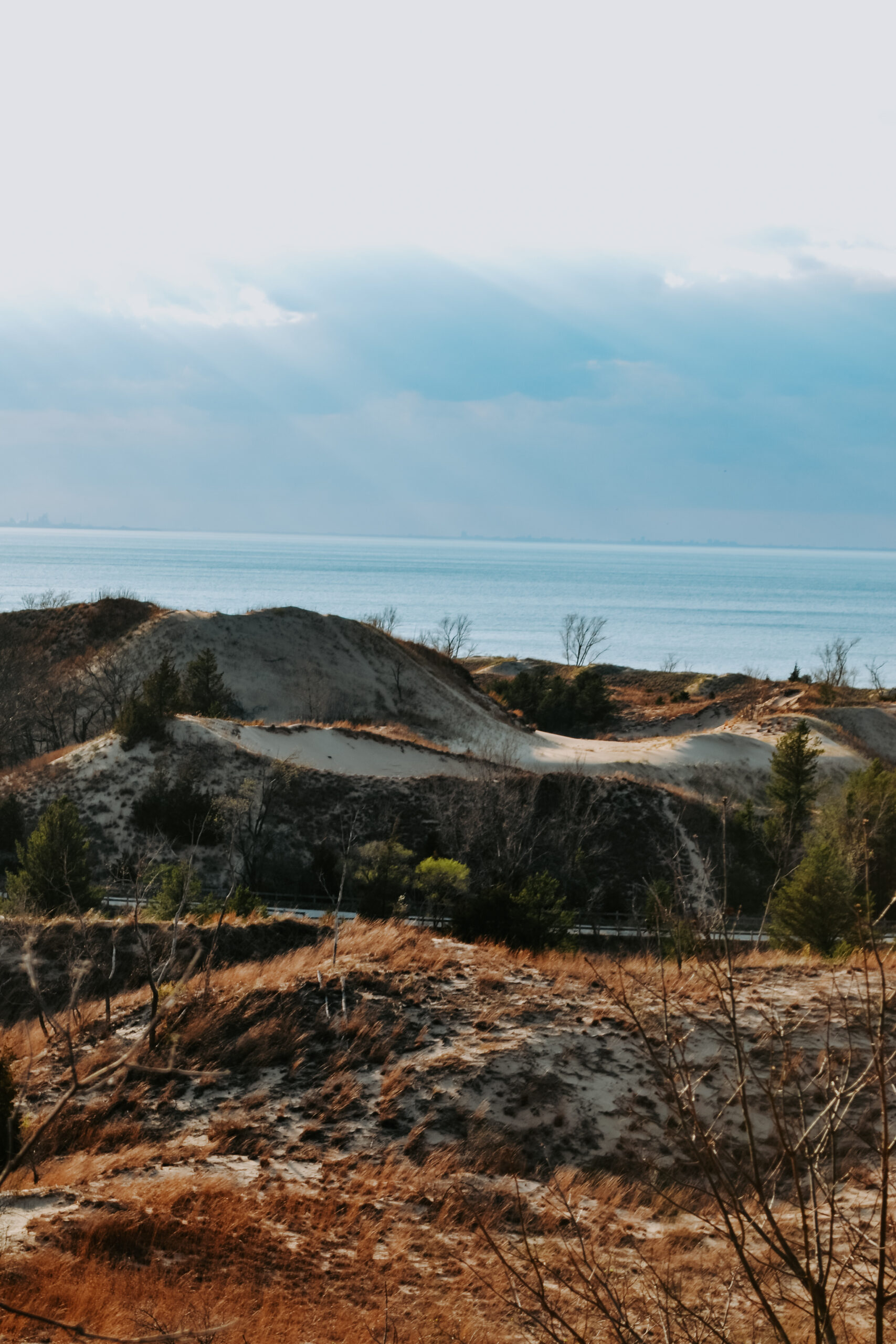
By late afternoon, the tanks were lifted and the day felt ours again. We returned to the park and hiked the Dune Succession Trail from West Beach. It’s the park’s most popular trail, and for good reason. A series of zigzagging wooden stairs takes you up, step by step, into another world. At the top, a new layer of dunes reveals itself. Sand piled like forgotten mountains, each peak shaped by wind and time. From the ridge, the lake spreads out ahead. You look out and you could be on Cape Cod. Except you’re not. There are no quaint inns here, no salt-stained coffee shops or antique bookstores. Just sand and wind and the promise of Lake Michigan rolling over itself toward a horizon you can’t touch.

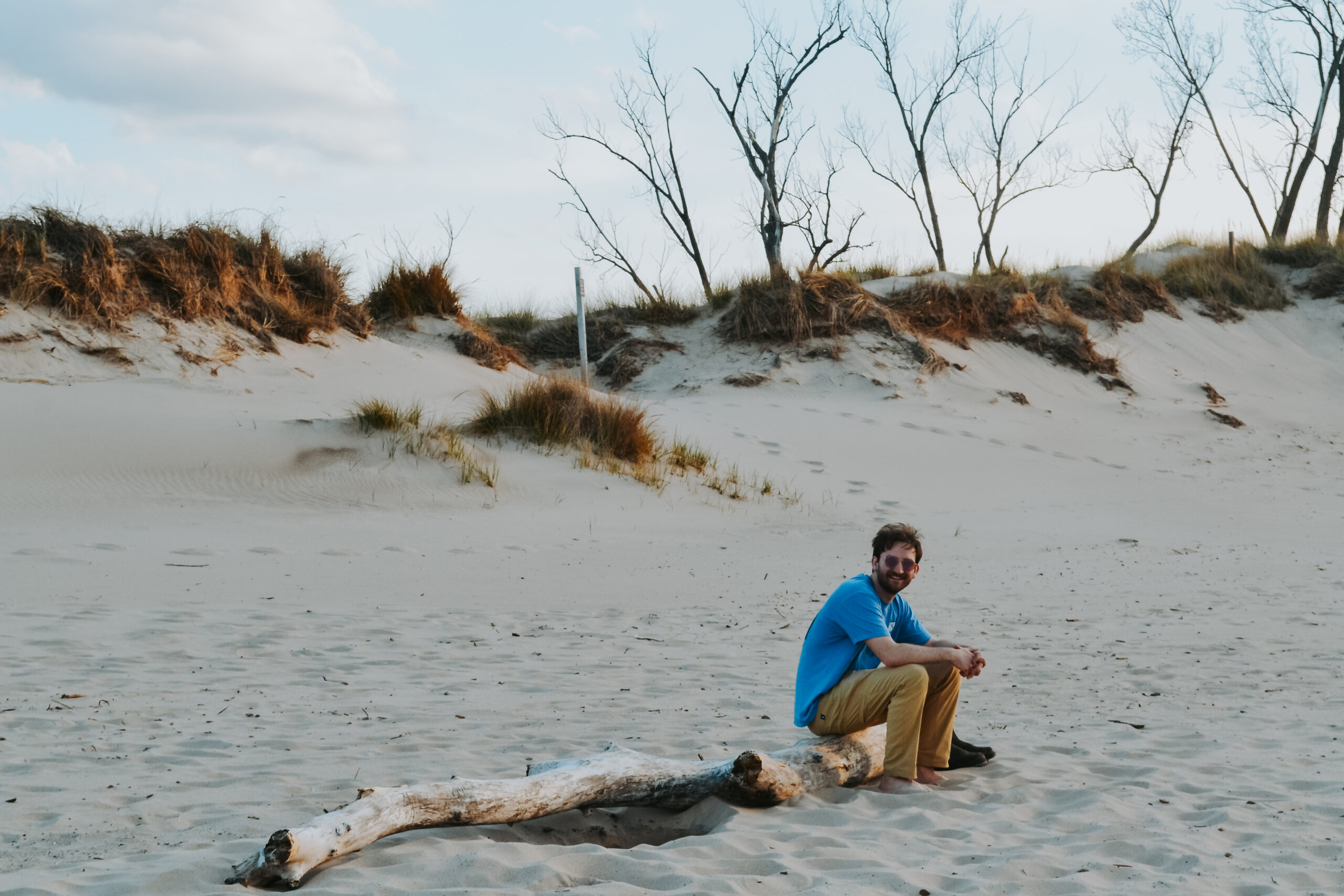
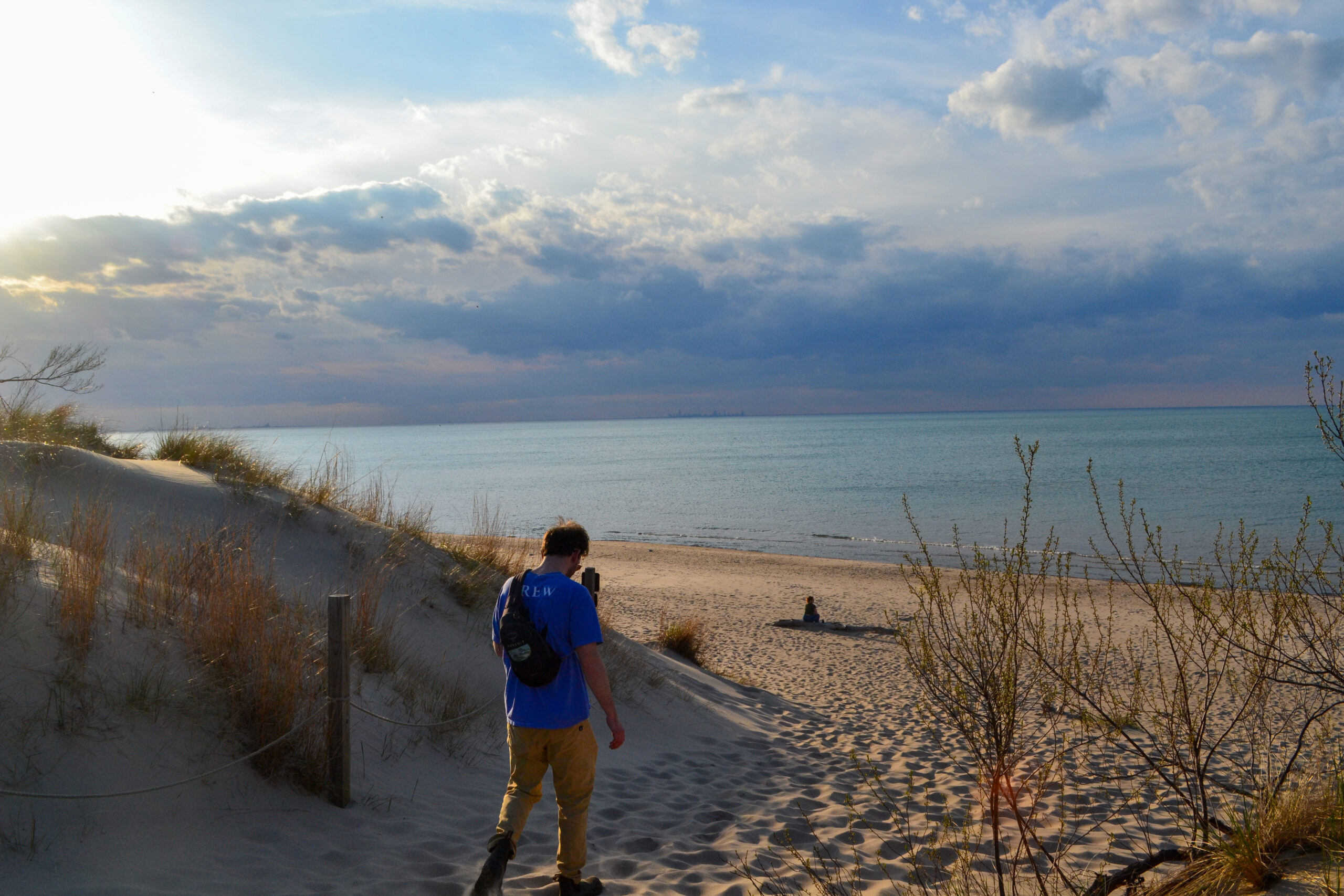
We walked the shoreline as the sun slipped low, the Chicago skyline soft in the distance, boats rocking gently on the water. At the beach, people moved around us—laughing, lingering, living—each caught in their own small moment. We buried our feet in the cool sand and felt the bite of the lake on our skin. We found a driftwood log and sat quietly, facing the light as it faded, the world softening to gold and gray.
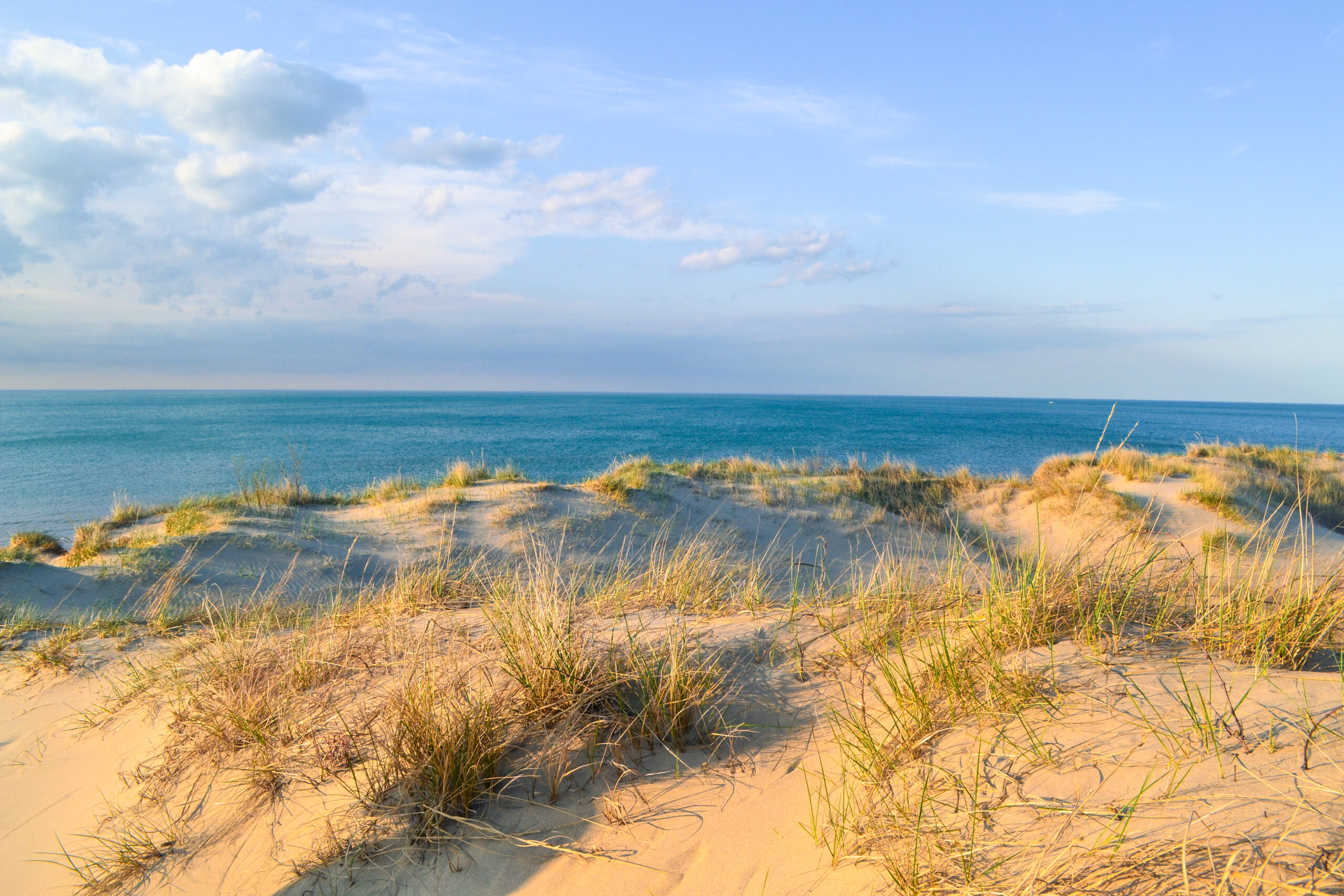
This is what succession looks like in the natural world: a process, slow and constant. First, the sand. Then the marram grass, stubborn and wiry. Then shrubs. Then trees, if they can manage it. Life stacking itself slowly over death, trying again and again until something sticks.
We left at dusk and headed west, through Illinois. The roads were packed. Semis bearing down in the night, all heading somewhere, maybe Chicago, with more urgency than us. The rumble of diesel, the soft glow of dashboard lights, and signs flying past at speeds that blurred their names. We stopped at a highway rest area again.
Sometimes, after days like this, when you learn about a barefoot woman who saved a forest, when you climb dunes that weren’t there a decade ago, when you tighten bolts and sweep out sand and wash your hands in a parking lot sink– you feel the simple joy of being exactly where you are.

Leave a Reply